For web scraping engineers used to developing, running and maintaining their own data-collection tool stack, 2026 is shaping up to be quite a change.
According to insights in Zyte’s 2026 Web Scraping Industry Report, the daily reality of firefighting broken data pipelines, proxy tuning and wasted engineering hours will increasingly be solved for the many developers who are instead turning to unified web scraping APIs.
Next up, AI components are emerging across the entire scraping lifecycle. Planning and orchestration, crawling, unblocking, extraction and validation - in 2026, each link in the chain has AI tools that reduce manual work.
2026 Web Scraping Industry Report
Insights and 26 actionable recommendations for data-gathering strategy this year.
AI as your development multiplier
Up to nine in 10 software developers at large now use AI in the development process, according to the report.
But, until now, such tools have struggled to fulfil the specific needs of web scraping development.
In 2026, that’s set to change.
AI-powered code generation, LLM-based extraction, and intelligent browser automation are compressing development cycles dramatically.
Writing scrapers from scratch.
Tools like Web Scraping Copilot generate working spider code from natural language instructions.
Spend hours tuning XPath selectors.
AI-powered extraction handles unstructured content and layout changes automatically.
Manually craft browser action scripts to ensure multi-step browser flows are completed.
AI-powered headless browser frameworks can help you reason through complex UI interactions.
The key is, developers can achieve much more, in less time. You're no longer writing boilerplate. You're specifying intent and supervising agents. That's a more valuable - as well as exciting - skill to develop for the future.
Catching up with the automation arms race
You might have noticed: website owners’ anti-bot systems now update multiple times per week. Manual configurations that lasted weeks now fail daily. Cloudflare rolls out its detection strategy every few minutes. As we documented in 2026 Web Scraping Industry Report, one major bot mitigation vendor deployed more than 25 version changes 10 months alone.
For scraping developers, the gap between mitigation automation and their own access automation is the defining constraint of 2026.
If your pipelines rely on manual tuning, you’re going to lose. Only automated, self-adjusting systems survive at scale. Your access infrastructure must continuously monitor its own performance, detect degradation, test alternatives, and adapt without human intervention.
This is why AI-powered access management platforms are gaining traction. When scraping at scale, they're the only sensible approach to accessing web data sustainably.
From infrastructure experts to data owners
For years, being a great scraping developer meant mastering different infrastructure components. A good scraper knew proxy pools inside out, configured headers and fingerprints like a virtuoso, and troubleshot site-specific extraction with speed and precision.
But there is a phenomenon happening in this space: developers are turning away their time and attention from managing infrastructure components to managing data outcomes.
Let’s face it, web scraping has become more complex. This gives rise to a cluster of API-based scraping infrastructure services, commonly known as web scraping APIs. Think of them as Swiss army knives for web data collection. They combine everything developers used to manage separately: IP rotation, browser automation, ban handling, and data extraction.
2026 Web Scraping Industry Report shows these services are eating proxy providers’ lunch. It’s not difficult to see why - these full-stack APIs absorb the wasted requests, only return clean data, and do it for a fraction of the time and peace of mind you spend on getting quality data for your users. More and more developers are waking up to this. The request volume of Zyte API grew 130% year-over-year.
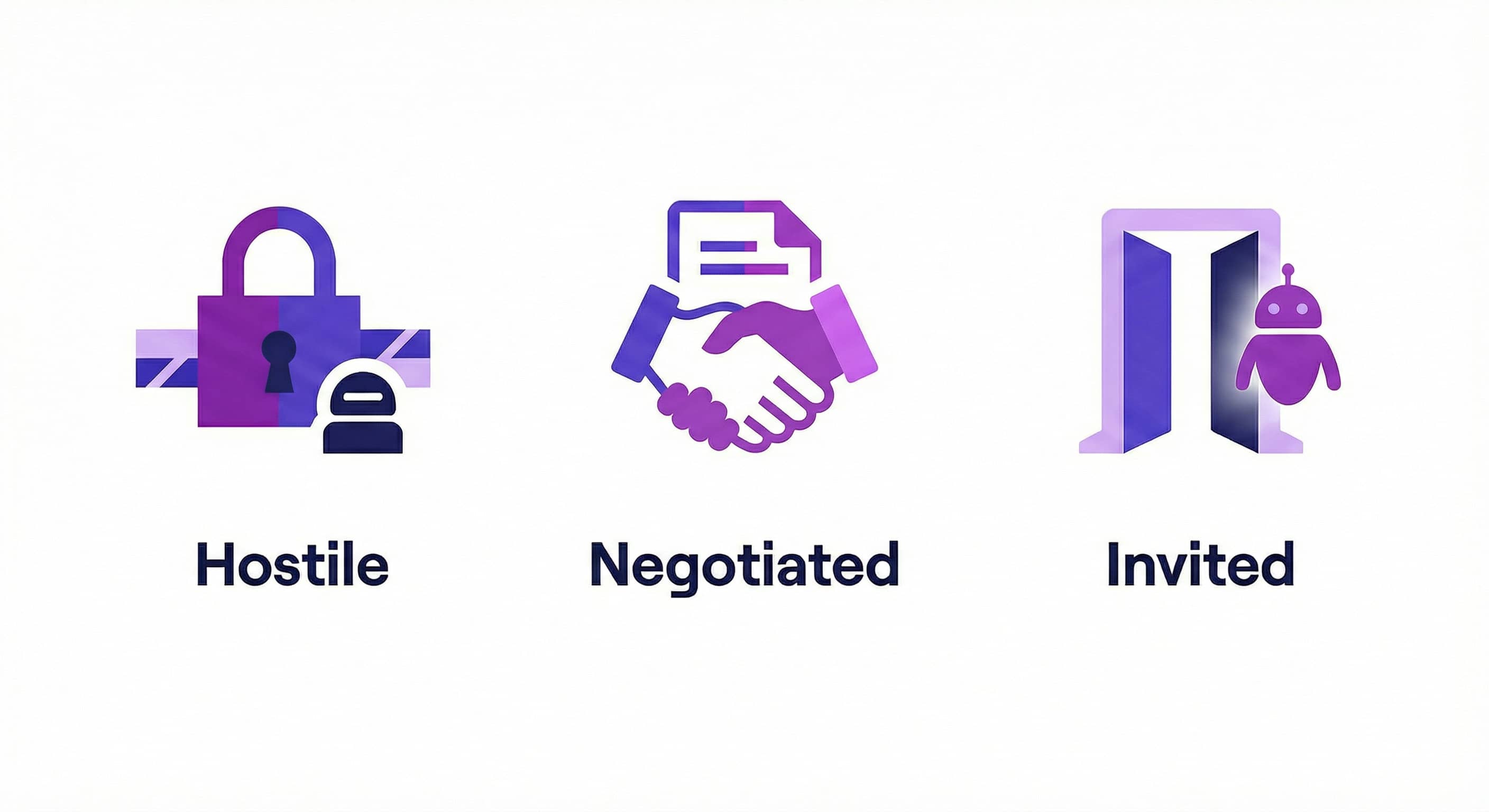
Hostile web
Sites that actively and growingly resist scraping.
Advanced fingerprinting, behavioral intelligence, and adaptive retry logic.
Negotiated web
Sites that allow access via licensing or attestation.
Micro-payment and identity management protocols such as x402 and Web Bot Auth
Invited web
Sites that welcome access from automated entities such as AI agents.
Direct API integration with Model Context Protocols (MCP) and Agentic Commerce Protocols (ACP).
From 2026, scraping developers must understand the new rules of the web. Those who do will build more efficient and defensible access paths to valuable web data.
You're still in the driver's seat
Here's what matters: you have to touch fewer buttons, but you're still the one driving.
While web scraping APIs power your access, AI-powered scraping components help you move faster and agents act as your copilot, you design the system, define the requirements and delineate constraints. You make the high-level technology decisions.
This year, the transition from solving individual sites to designing intelligent systems that solve them for you is where your real value lies.
For a more in-depth analysis and recommendations on how you can reposition yourself as a scraping developer in 2026, download 2026 Web Scraping Industry Report.
2026 Web Scraping Industry Report
Insights and 26 actionable recommendations for data-gathering strategy this year.