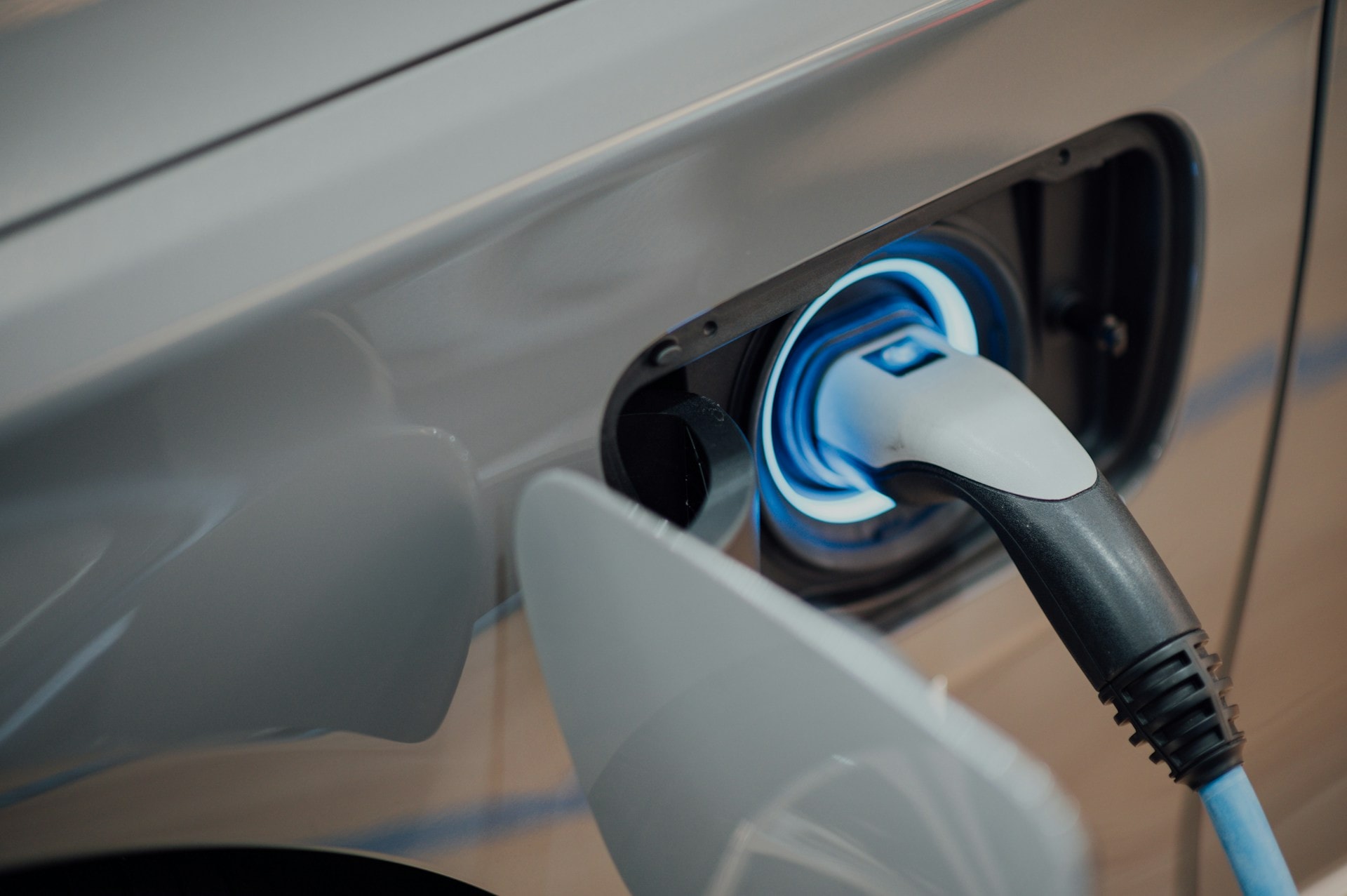
Did you hear the one about the giant global industry transitioning off dirty old technology on the road to a more efficient future?
No, I’m not talking about automotive’s grand electric vehicle (EV) migration - in web data, too, a similar journey is underway.
Web data gathering has long relied on a series of dedicated technologies, like proxy servers. Proxies are intermediary servers that route requests on behalf of a scraper, often through a rotating series of IP addresses, in order to work within limitations that destination sites sometimes place on access.
Such point solutions are a messy business, the petrol engines of web data. But now, just like auto makers are deprecating the petrol-powered cars of old, the web data industry is transitioning off its dependence on the out-moded tools of the past.
Toward EV and API
Under the hood of web data’s journey is a single web scraping API that combines proxy calling, automatic unblocking and browser rendering with extraction tooling itself. No wonder single-function proxy solutions are facing challenges.
Sales of internal combustion engines have been declining since 2017, and 2025 EV shipments are expected to grow by 25% year-on-year.
We are seeing the same trend in web data. Zyte’s own web scraping API which includes a bundled proxy solution, serviced 12 billion successful requests in July 2025, 10 times up from two years earlier. The web scraping API market is forecast to grow by 25% from $1 billion in 2024 to $1.27 billion in 2031.
Just like the auto industry hopes, the result on the web will be a cleaner, more sustainable, reliable and results-oriented data acquisition workflow.
But how will we get there? How will the industry wean itself off its digital fossil fuel?
1. Lifetime costs encourage adoption
Detractors of both EVs and APIs criticise costs.
Electric vehicles debuted with higher price tags, and only recently have we begun to see budget models emerge.
Similarly, to many web scraping professionals, APIs often appear to be the premium choice, when compared with stitching together conventional proxies and scripts.
Both observations overlook the impact of amortisation.
Electricity is consistently cheaper than petrol, while electric vehicles have fewer moving parts to maintain, battery prices are falling year after year, range is increasing and the scaling-up of charging infrastructure is forcing costs down even further. Across all categories of car, seven-year total cost of ownership is now lower for EVs than for gas counterparts.
Anyone scraping at scale needs to consider the same total cost equation. In web data, every aspect of the old way drains time - stitching together proxies and scripts, trouble-shooting access limitations, maintaining infrastructure and patching crawler code. That time means money.
APIs bring the cost per successful record to parity with - and often below - proxy-only setups. Zyte’s own analysis showed that more than 80% of Zyte API users spend the same as or less than proxy-based solutions.
As more data professionals, like car owners, recognise the importance of a total cost consideration, web scraping API adoption will accelerate.
2. Hybrids soften the migration journey
Not everyone is ready to go all-in on the future. For drivers, jumping straight from petrol to a full EV once felt risky. What if the battery ran out? Where would they charge? Was the higher upfront cost worth it?
Hybrid engines lowered that uncertainty. They let vehicle owners keep the familiarity and range of their combustion engines, while experiencing the EV benefits - instant torque, fewer moving parts, cleaner operation.
Similarly, migrating a scraping setup from proxy-driven to API-first doesn’t have to be a wholesale leap. Many teams begin by routing only the most difficult scraping tasks through APIs, while keeping stable, easier jobs on conventional stacks.
Some Zyte customers use Zyte API’s proxy mode to phase-in API orchestration, while still directly interacting with the proxies underneath.
3. External pressure to change course
Grand transitions aren’t always driverless. Sometimes, change is accelerated when outside forces compel it.
In cars, governments have imposed combustion engine phase-out deadlines, enforced emissions standards, and dangled tax break incentives. With such external impositions, car makers increased focus on charging and battery standardisation - and the industry is moving.
Adoption of web scraping APIs will also be driven by external compulsion. Publishers and infrastructure providers are increasingly limiting access using bot “traps” and compliance rules. Plain old proxies are blunt tools, unable to comply with these new external demands.
But web scraping APIs can adapt session flows, integrate compliance, and enforce governance, while still delivering reliable access. Those which follow the new rules of the road will be first to reach the destination.
4. Commoditisation shifts value upward
In both industries, the base input is becoming a commodity: electricity in EVs, IPs in scraping. The real edge now lies in the orchestration and innovation layer built on top of that input.
In autos, innovation happens in charging networks, standards bodies, and battery supply chains. Batteries and motors are vital, but they’re no longer the only battleground – the real differentiation comes from who builds the charging network, who sets the standard, and who influences the ecosystem around it.
Similarly, in web data, standalone proxy services are fading into the background. Providers now offer undifferentiated raw IPs, which has driven down margins and intensified price pressure.
The real valuable differentiation is happening on top of the proxy foundation – keeping sessions alive, mitigating bans, routing requests efficiently, spinning up headless browsers when needed, and delivering accurate extractions.
Web scraping APIs that combine these functions effectively are increasingly where long-term value accumulates.
In both cars and scraping, the winners aren’t only the ones supplying raw fuel. They’re the ones building the roads and learning new ways to drive.
Set GPS to ‘API’
A generational transition to EVs and APIs is already underway, and the direction of travel is irreversible.
For everyone, the pace may differ - some will move early, some late.
But all will move eventually. And the cleaner, more powerful industries we end up with will benefit us all.