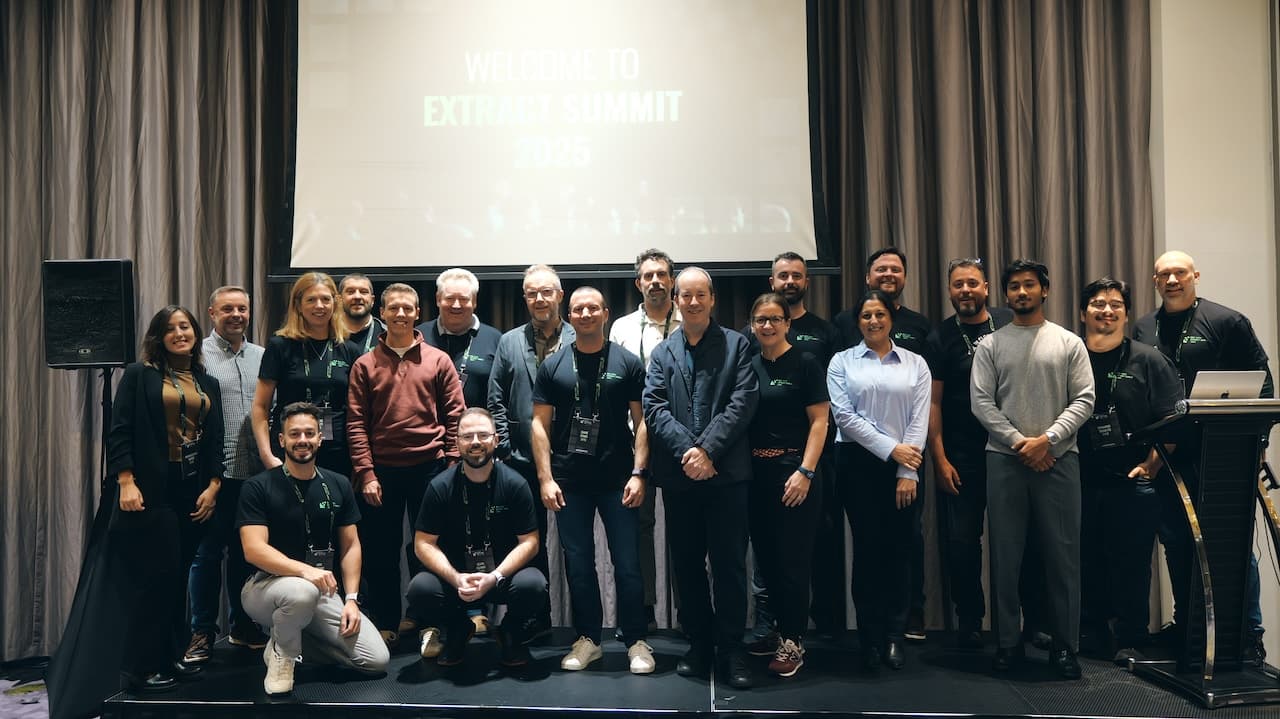
It may be the height of summer but, at Zyte, planning for this autumn’s Extract Summit events is well underway.
Returning for its eighth year in 2026, the summit runs across two days in two cities:
- Brazos Hall, Austin, Texas (October 7 to 8).
- Radisson Blu, Dublin, Ireland (November 10 to 11).
It is built entirely around the messy, adversarial reality of web data: broken selectors, hostile anti-bot systems, agentic browsers, unpredictable AI extraction, and the rules governing legal collection of public data.
Here are five reasons it is worth leaving your desk for.
1. AI has made web scraping interesting again
The official theme for 2026 is the intersection of artificial intelligence and web data.
The agenda covers how LLMs can act as resilient data parsers, how AI accelerates the coding of extraction scripts, and how autonomous agents alter collection patterns. It also examines the adversarial side: how anti-bot systems use AI to detect scrapers, and how extraction teams adapt.
The shift toward agentic scraping is already prompting infrastructure changes beyond the conference circuit. The Internet Engineering Task Force (IETF) recently chartered a Web Bot Authentication Working Group to standardize cryptographic authentication for automated clients, noting that current methods like IP allowlists and user-agent strings have significant security and scalability limitations, as detailed in the IETF Datatracker.
Extract Summit provides a venue to argue over which of these emerging agent architectures belong in production and which remain experimental.
2. Meet people who understand your 2 a.m. nightmares
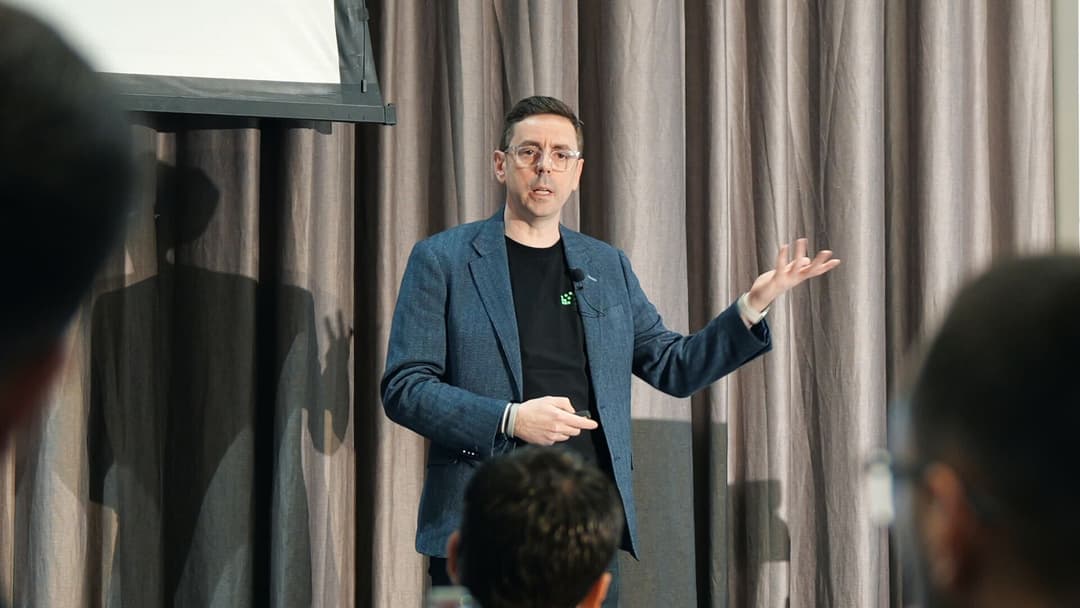
Extract Summit is deliberately narrow. It targets the people who build, debug, scale, and govern data pipelines: engineers, researchers, founders, and data scientists.
Because the audience is specialist, the programme does not have to waste time explaining what a proxy is. The organizers explicitly reject recycled developer talks and vendor product pitches. Instead, the agenda favors candid accounts of hard technical problems, failed approaches, and working solutions.
There are no sponsor booths or exhibition halls. The focus stays entirely on the work. You can expect a room full of peers who understand the same stack, risks, and failure modes - enabling the kind of detailed, technical conversations that rarely happen at generalist tech events.
3. Build, test, and argue instead of watching slides
Extract Summit divides its two-day format into distinct experiences:
- Day one is a hands-on “Dev Day” where attendees are expected to bring their laptops and build.
- Day two features industry talks and presentations.
The planned 2026 workshop programme includes five 60-minute sessions covering familiar, frustrating operational challenges. You will find sessions on parsing and normalizing extracted data for AI ingestion, configuring browser automation for agentic scraping, and implementing self-healing scrapers using large language models (LLMs) and failure detection loops.
The workshop day also includes an open lightning-talk session, giving attendees five minutes to share what they are building or debugging. The format is designed to produce something you can try back at work: a tested technique, an implementation idea, or a better way to frame a stubborn problem.
4. Hot-button questions are on the agenda
Building a scraper is only half the job; the other half is ensuring the extracted data is compliant and legally sound. Extract Summit pairs its engineering tracks with sessions on law, ethics, and governance.
The 2026 lineup already includes legal sessions in both Austin and Dublin, alongside talks on network fingerprinting, infrastructure, and anti-ban engineering.
The timing is particularly relevant for European operations. The European Commission’s Artificial Intelligence Act, which governs the deployment and transparency of AI systems, reaches a major milestone in August 2026 when its transparency rules come into effect. The summit offers a timely forum for engineering, legal, and data leaders to compare their understanding of this shifting regulatory environment.

5. The best material probably won’t happen on stage
Extract Summit is deliberately kept small to foster peer interaction. Organizers intend for the conversations in the hallway to be as useful as the sessions on stage.
The event has a proven track record. First held in Dublin in 2019, Extract Summit has built a substantial public archive. The official site hosts recorded talks from every year between 2019 and 2025, available for free without a login, via the official past talks archive.
The archive lets prospective attendees judge the substance of the sessions before committing. But the in-person event adds what recordings cannot: the chance to question speakers, compare approaches, and continue a useful conversation after the talk ends.
The agenda so far
The program is shaping up nicely.
Extract Summit Austin - October 7 to 8, 2026:
- Accessing the web’s data - Shane Evans, CEO at Zyte (Business)
- The latest in the legality of web data - Victoria Vlahoyiannis, Senior Legal Counsel at Zyte (Legal)
- Our latest techniques on consistent web access - Zyte Antiban Team (Antiban)
- TCP/IP fingerprinting: How It Works and How We Beat It - Joseph Dye, Technical Co-founder of Byteful (Proxies)
Extract Summit Dublin - November 10 to 11, 2026:
- Accessing the web’s data - Shane Evans, CEO at Zyte (Business)
- Lightpanda: An AI-native web browser built from scratch - Pierre Tachoire, Co-founder of Lightpanda (Infrastructure)
- The latest in the legality of web data - Sally Hinfey, Chief Legal Officer at Zyte (Legal)
- Title to be announced - Aare Reintam, CybExer Technologies and TrustSig (Anti-bot technology)
- Our latest techniques on consistent web access - Zyte Antiban Team (Antiban)
- Raw insights into the proxy business - Proxy-provider panel (Panel)
To secure a ticket, visit the official Extract Summit website.