Python
Articles from the Zyte blog in Python.
What is a self-healing web scraper?
A self-healing web scraper detects when a site change breaks extraction, repairs the code within limits you set, proves the fix with tests, and escalates when it can't. What it fixes, what it doesn't, how the loop works and what a repair costs.

Self-healing scrapers: four things to put in place before an AI agent fixes your spiders
What decides whether a self-healing scraper's repair is any good: detection during the crawl, a specific failure report, extraction code the agent can target, and tests that can fail.

Web Scraping for RAG: Build a Reliable Pipeline with Zyte API, Qdrant and LangChain
Build a RAG pipeline that survives bot blocks and JavaScript pages: fetch LLM-ready Markdown with Zyte API, gate bad pages, and test it before deploying.

Self-healing spiders: letting an agent fix your Scrapy crawl, with a lid on it
Two demos from our Extract Summit Austin workshop: an agent repairs a Scrapy spider after a site redesign, then heals a live crawl mid-run through Spidermon and the Scrapy MCP, with the measured costs and the mistakes that shaped the design.

JSON Parsing with Python [Practical Guide]
Code for parsing JSON in Python, from json.loads on a string to json.load on a file. Includes fixes for the errors you'll hit and how to query nested data.
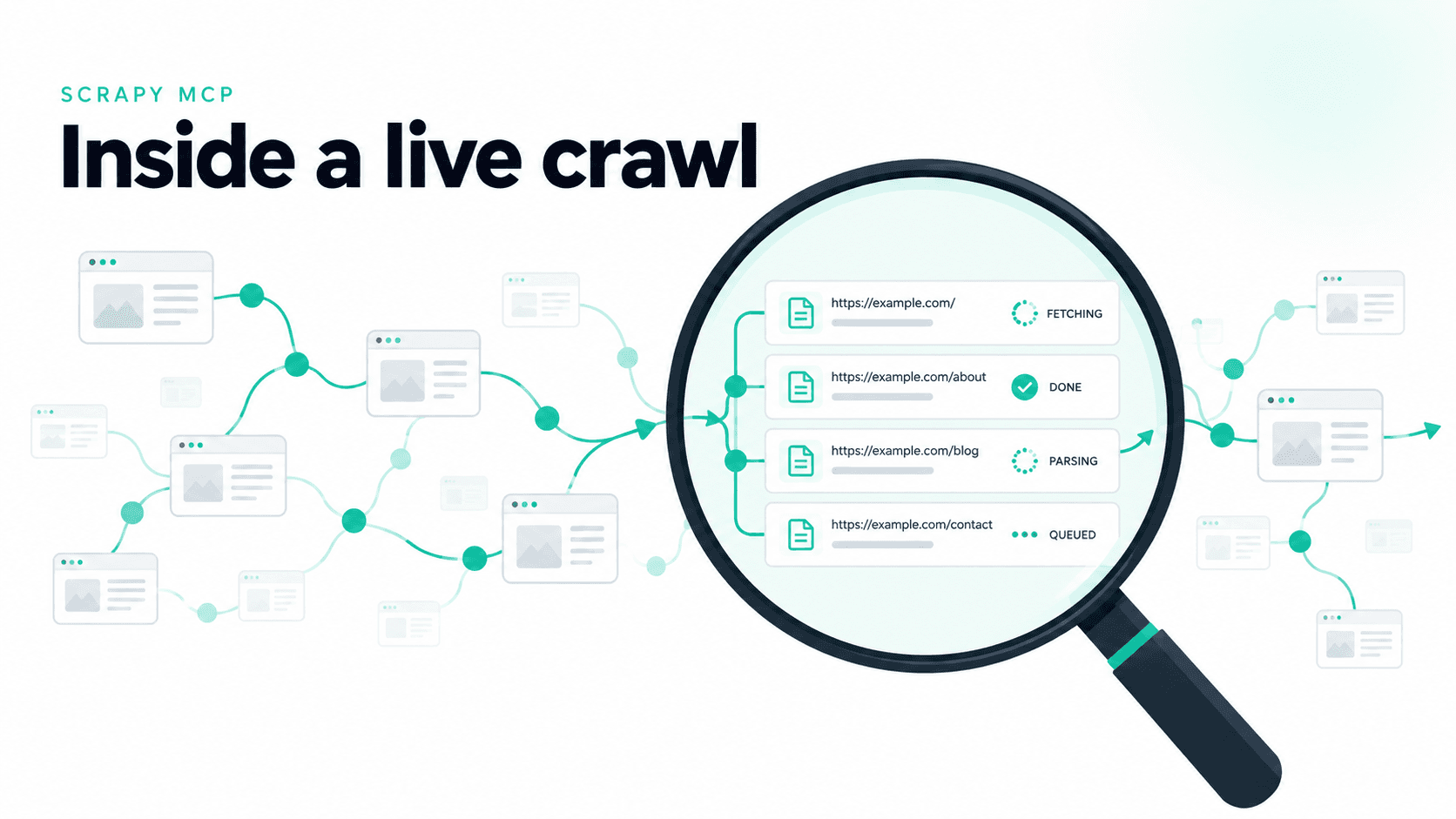
Inside Scrapy's RemoteControl extension
Scrapy 2.19's RemoteControl extension runs a small authenticated HTTP server inside every crawl. How it starts, how it's secured, what the code you send can reach, and what you can do with it on a live crawl, plus the traps and what changes under scrapy-zyte-api.
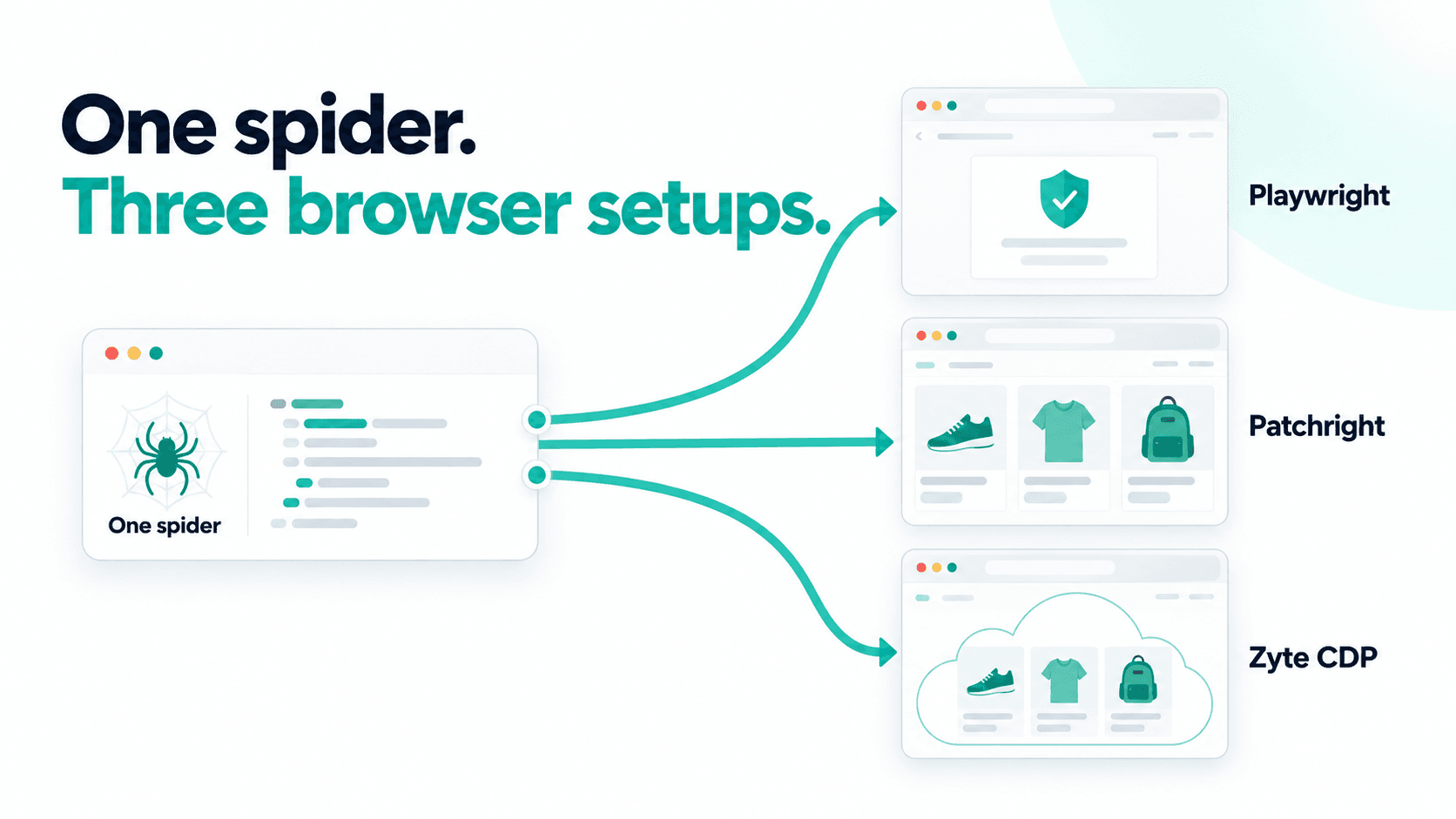
One scrapy-playwright Spider, Three Browser Setups: Playwright, Patchright, and Zyte
One Scrapy spider, three browser setups: stock Playwright, Patchright via the new PLAYWRIGHT_BROWSER_PROVIDER hook, and a remote browser on Zyte over CDP. Same spider and selectors throughout, only the browser changes.
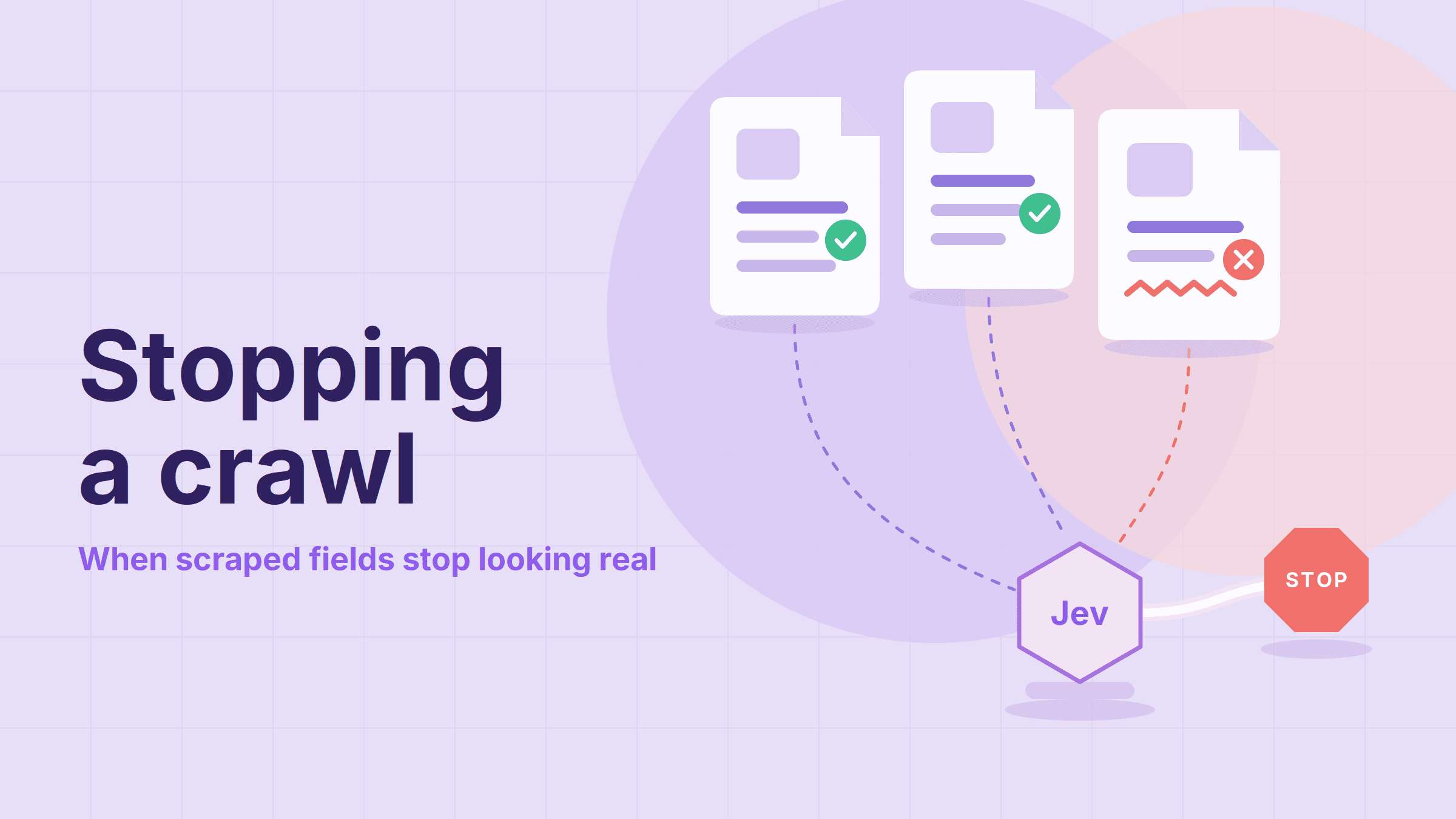
Stopping a crawl when the data stops looking real with Jev
A Scrapy pipeline that asks a fast, calibrated AI model whether each scraped field still looks real, and stops the crawl when too many don't. What it caught, what it misses, and whether building it was worth it.
How to scrape a website with Python and lxml
Install lxml, select elements with XPath and CSS selectors, and extract clean data from real pages. A practical Python web scraping tutorial with examples.
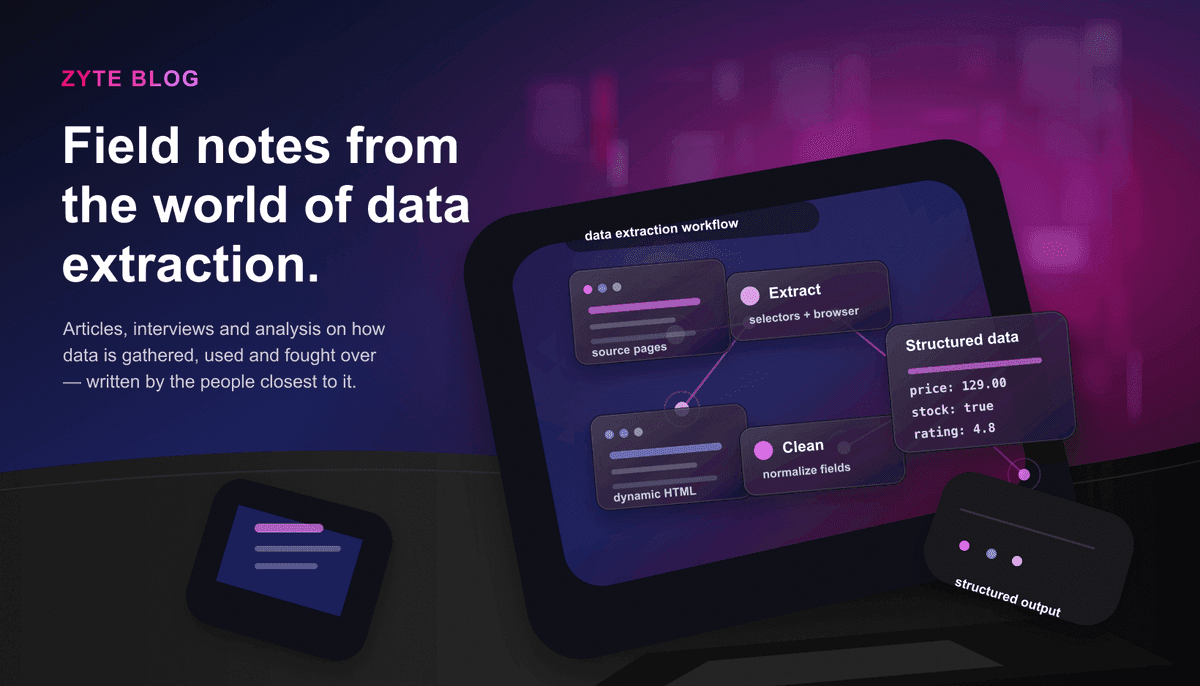
How to ensure data quality in your Scrapy web scraping projects using Spidermon and Claude Code
Spidermon is an open-source monitoring framework for Scrapy. You attach it to your spider, define what "success" looks like, and it automatically checks your crawl results after the spider closes, flagging anything that doesn't meet your standards.
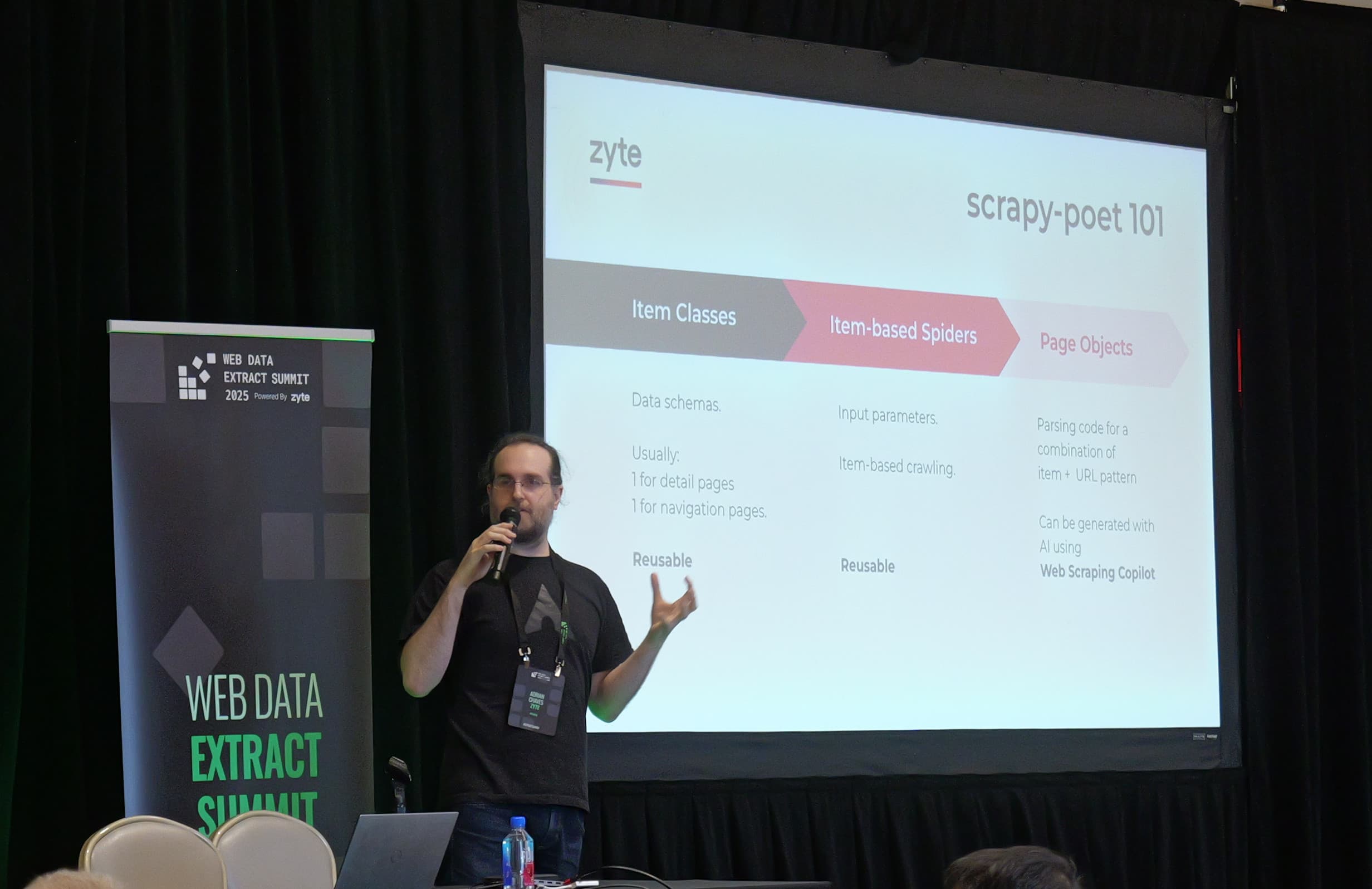
The Scrapy whisperer: Adrian Chaves on Web Scraping Copilot
An interview with Scrapy maintainer Adrian Chaves on Zyte’s Web Scraping Copilot, AI-generated parsing code, and building reliable scraping workflows.
Stop using Python requests for web scraping: Use these modern modules instead
While the 'Requests' library remains the default choice for many Python developers due to its reliability and extensive documentation, the Python HTTP landscape has evolved considerably. Modern alternatives now offer significant advantages, including built-in asynchronous support, HTTP/2 compatibility, enhanced performance, and up-to-date TLS handling.