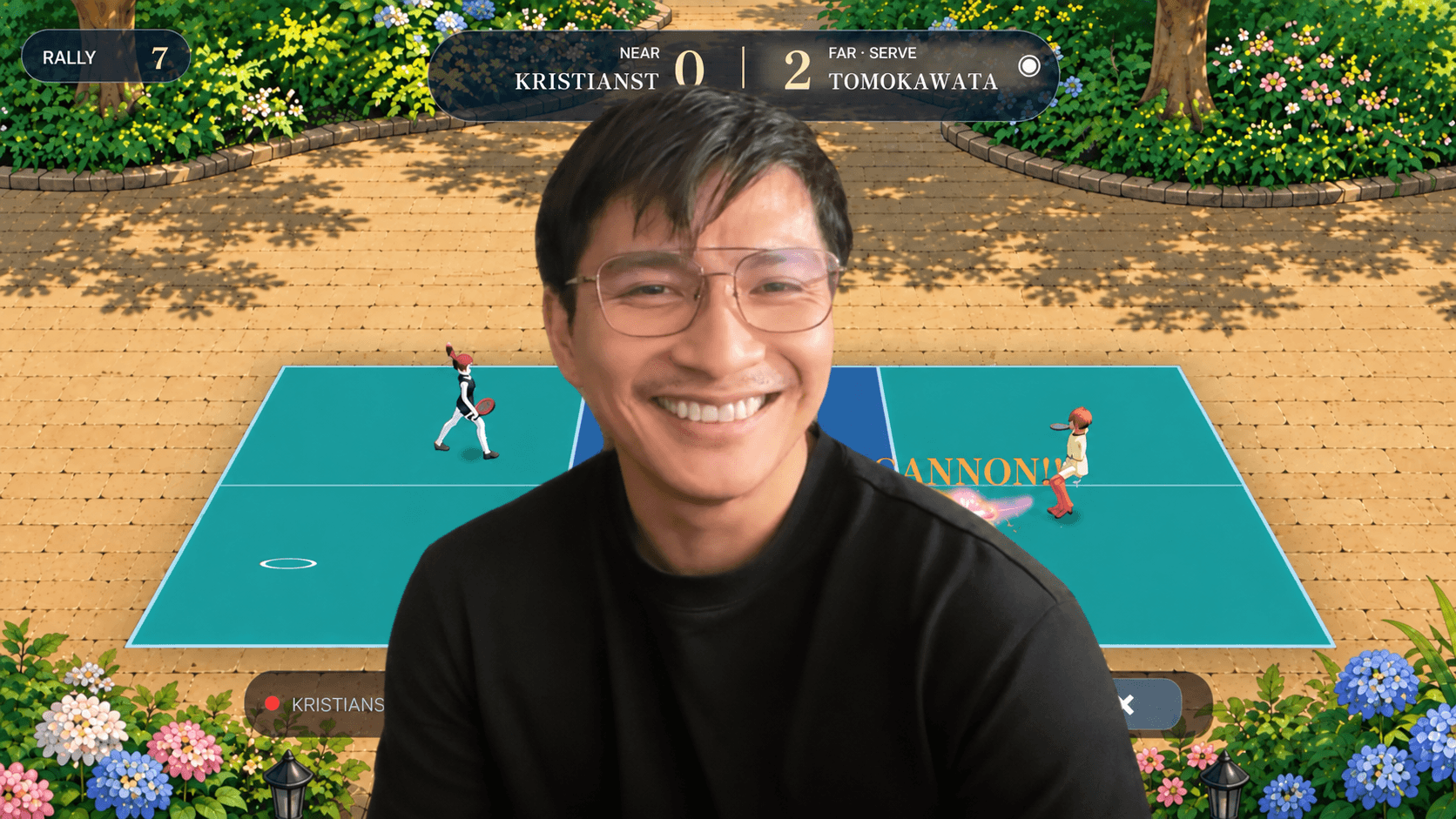
I have a confession to make: I have never played a physical game of pickleball in my life.
Yet, somehow, I just spent the last couple of months building a globally distributed, AI-driven universe dedicated to the world's fastest-growing sport.
The whole thing started out of a very specific necessity. A few months ago, my wife and I were traveling across Europe. Faced with agonizingly long airport layovers, I realized we needed a simple, fun digital game we could play together on our phones to pass the time. Around the same time, we found out we're expecting our first child this coming January.
That news changed my perspective on the project entirely. I didn’t just want to build a quick web app to kill time at an airport gate anymore. I wanted to build a "safe space" - a wholesome, interactive, online open world where my future kid could eventually hang out and play safely.
When I shared the early version with my friends and colleagues here at Zyte, the feedback was incredible. It motivated me to see just how far I could push the technical boundaries.
Today, Pikuball is a live multiplayer game with an RPG-style lobby, AI bots, and multiple mini-games. We've already processed over 3 matches.

The craziest part? I had zero game development experience before this. Here is how I used AI, rigorous engineering discipline, and robust infrastructure to pull this off by working just 30 minutes a day.
The pivot: Hitting the web limit
My initial goal was to build the game using native JavaScript for the browser. However, I quickly hit a hard architectural limit: if you want to use web technologies for a game of this scale, you're capped at around 200MB.
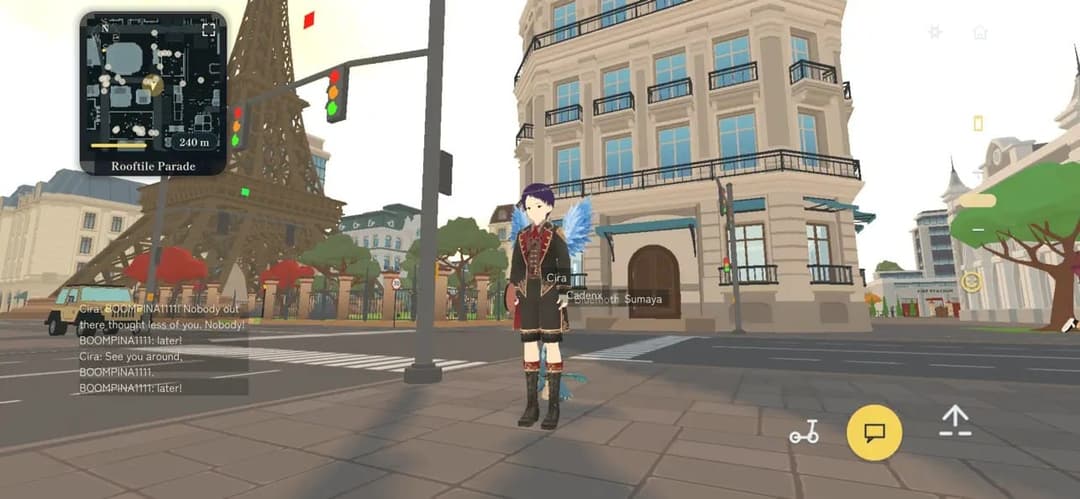
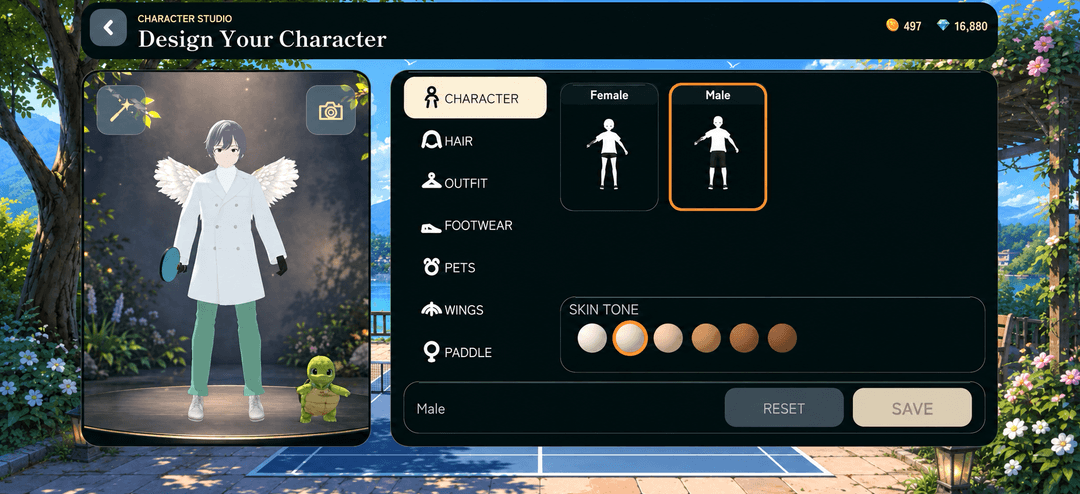
To build the rich open-world lobby I was envisioning - where players could roam around a 3D city, customize their avatars with wings that grant speed boosts, and seamlessly launch into different mini-games like a zombie-survival FPS or a "Red Light, Green Light" survival run - I needed more flexibility.
I switched to Unity. I had never used Unity before, but as software engineers, we can't let unfamiliar tools block us.
AI as my co-developer and 3D artist
Because I had no background in 3D rendering or modeling, I had to get creative with my workflow.
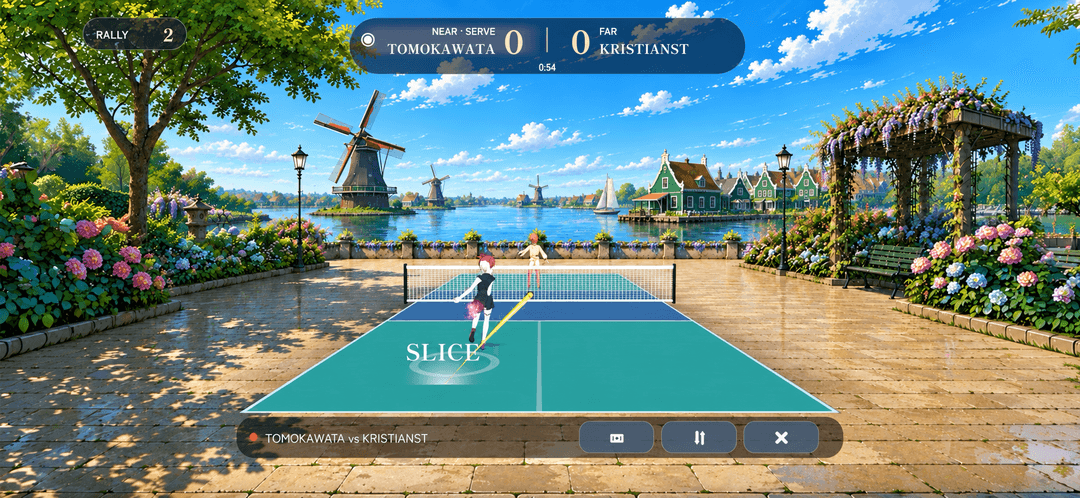
When you play Pikuball, the court is a 3D layer, but the beautiful environments around it - like Mount Fuji, the Eiffel Tower, or Sydney - start as 2D images. To make the scenery look and feel great, I used ChatGPT to generate 2D environmental assets.
To bring the world to life, I used a tool called Meshy.ai. I would feed it my 2D images, and it would generate a 3D render. Once I had those 3D assets, I turned to Claude. I'd ask Claude to write the C# scripts for Unity to animate the renders. To save time on the basic city infrastructure, I bought a low-poly asset pack for the houses and buildings. AI allowed me to skip years of learning 3D artistry and focus purely on system integration.
Serious engineering for a ‘silly’ game
When people hear I built an MMO-lite in two months while working full-time at Zyte, they assume I was grinding all night. The truth? I spent maybe 30 minutes a day on this during the week, and maybe four hours on weekends to build new mini-games.
The secret wasn't grinding; it was automation. I applied the exact same strict software engineering practices to Pikuball that we here use for massive enterprise data systems.
First, I wrote around 5,000 automated unit tests. Second, I created a completely automated "engineering loop."
When a player submits a bug report via the in-game form, I literally just paste that raw feedback directly into Claude - sometimes even in my native language, Tagalog, because I'm too lazy to translate it! Claude does the thinking, writes the fix, and verifies it against my test suite. My only job is to jump into the staging environment for a quick visual check.
Edge routing and custom ops
To keep an open-world game lag-free as it scales, you can't just hope for the best. You need visibility and proximity to your users.
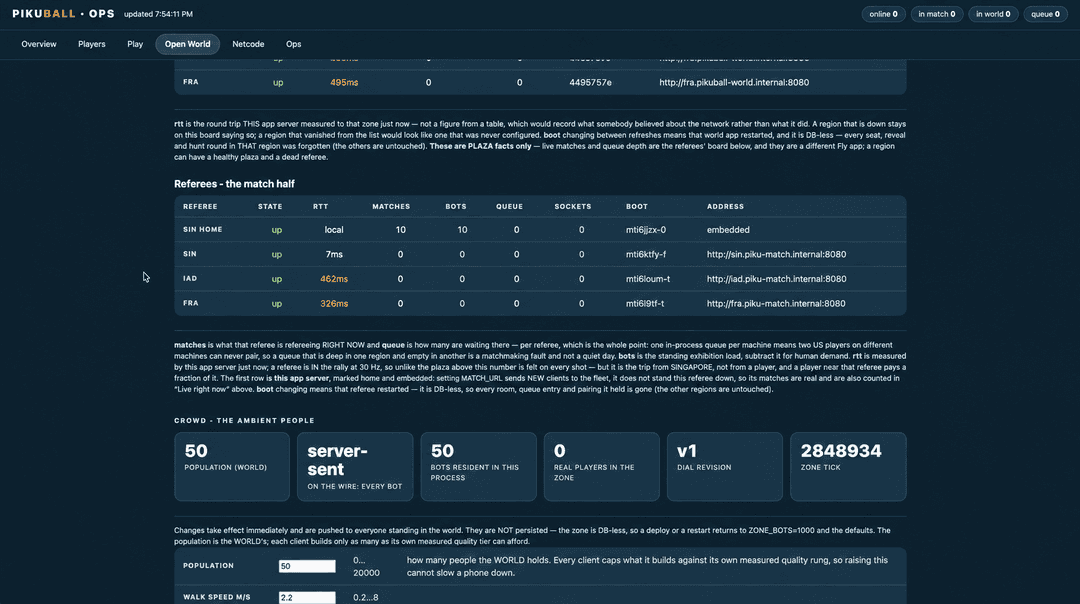
I built a custom operations dashboard to monitor everything happening in the game.
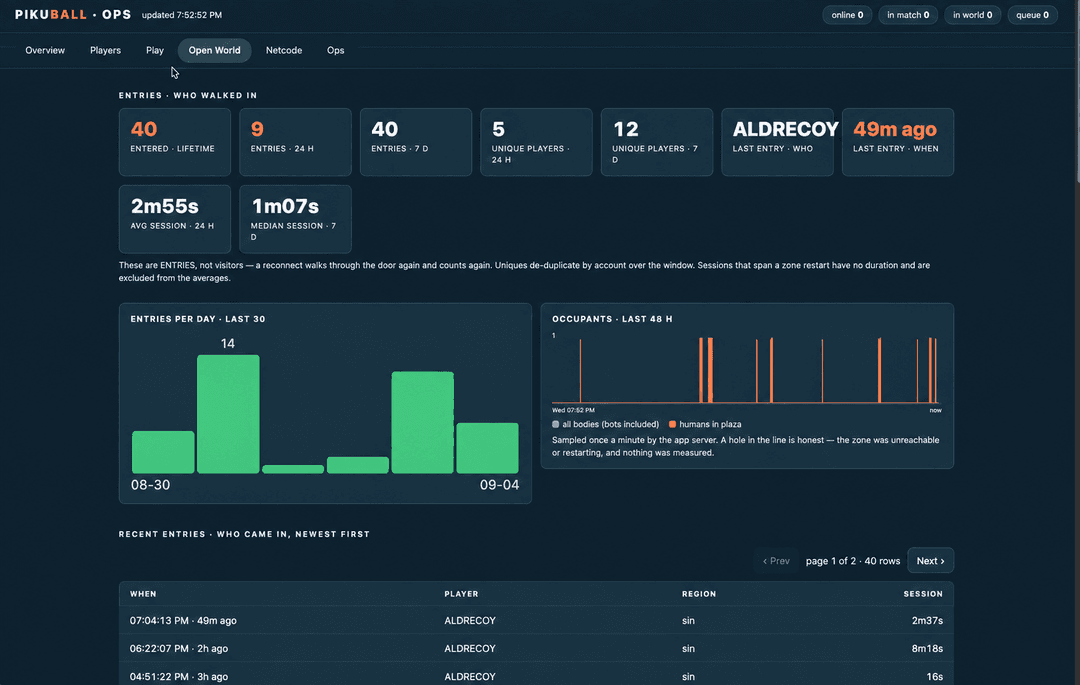
I track real-time active sessions, device IDs, memory usage, and latency. If a user crashes, I can see the exact memory warning spikes and exceptions in my dashboard. I have automated alerts that tell me exactly what broke and where, so I don't have to wait for app store reviews to find out my game is crashing.
To solve latency, I deployed the game's backend across three distinct server regions:
- Singapore (for all Asian traffic)
- France (for EU traffic)
- United States (for North America)
Thanks to this edge routing, players are automatically connected to the nearest server, keeping latency down to a highly responsive 50 to 60 milliseconds.
Solving the ‘empty room’ problem
One of the biggest challenges in multiplayer game design is the cold-start problem. If a new user logs in and the lobby is empty, the game feels dead and they immediately churn.
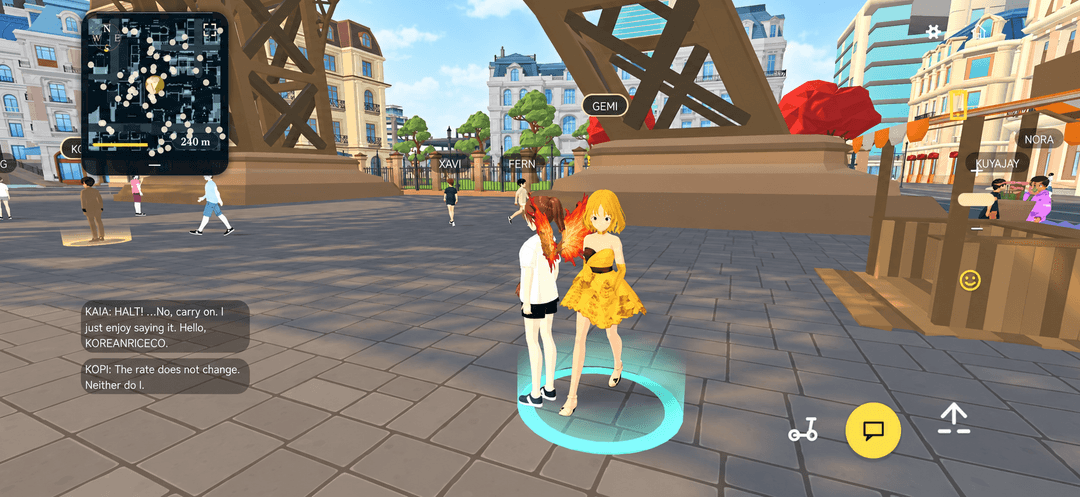
To solve this, I populated the open world with LLM-powered AI bots. But in order for the game to be enjoyable, the bots actually have to play and act like humans. Early on, testers complained that the AI opponents weren't reacting to the ball naturally. I went back to Claude and automated the fine-tuning of their movement patterns and reaction times to mimic human error and strategy.
Now, you can walk up to an AI character in the lobby (like "Pula"), have a realistic chat, and challenge them to a match. The world is alive 24/7, even if you are the only human logged in.
The real ROI
Right now, I’m rolling out updates and dealing with the usual app store hurdles (like getting my Android version temporarily rejected because I accidentally set the age rating to 3+ instead of 13+ due to the social chat features).
I'm not doing this to pack the game with annoying, intrusive mobile ads. My monetization plan relies entirely on cosmetic upgrades and seamless, in-world "billboard" partnership ads that blend into the scenery.
I built this because solving heavy engineering challenges - latency, edge networks, memory optimization, and automated testing - is genuinely fun. Honing my system design skills on a passion project is incredibly rewarding, and it's infinitely better than doom-scrolling on social media.
And ultimately, I now have a pretty awesome game to play with my wife during our next airport layover.
If you want to check out the game (or try to beat my AI bots), you can play it right now on iOS, Android, or your browser at Pikuball.com.