The Zyte Blog
Fresh articles, deep technical guides, product updates, and perspectives from the Zyte team.
Newsletter
Announcement
Product Update
Open Source
Use case
How To
Leadership
Handling Bans




Most Recent
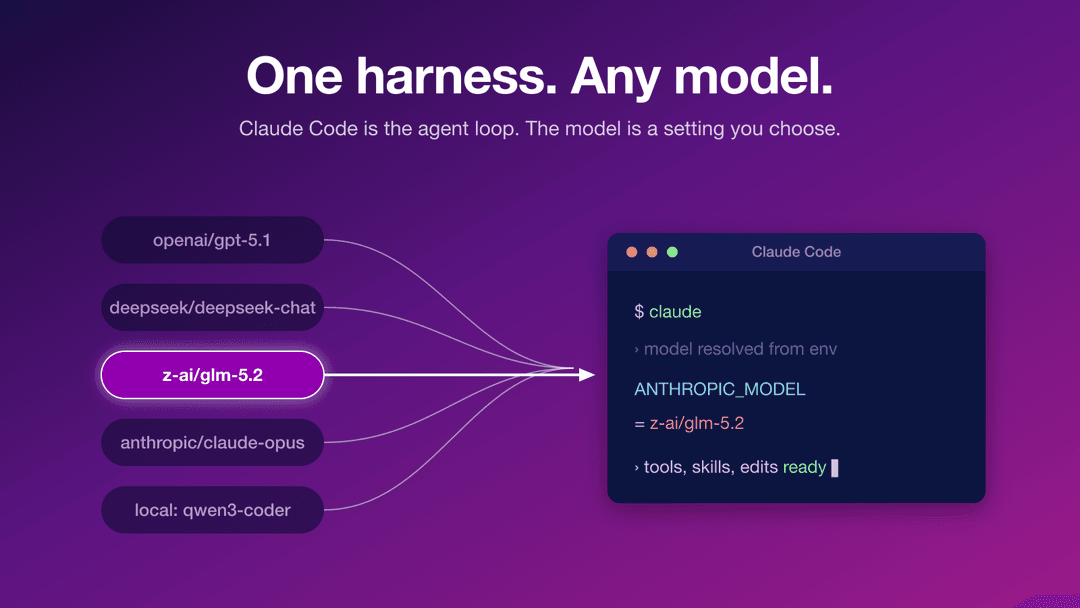
How to run any model inside Claude Code
I run GLM 5.2 inside Claude Code with the same tools, the same skills, and the same agent loop. Three environment variables is all it takes.
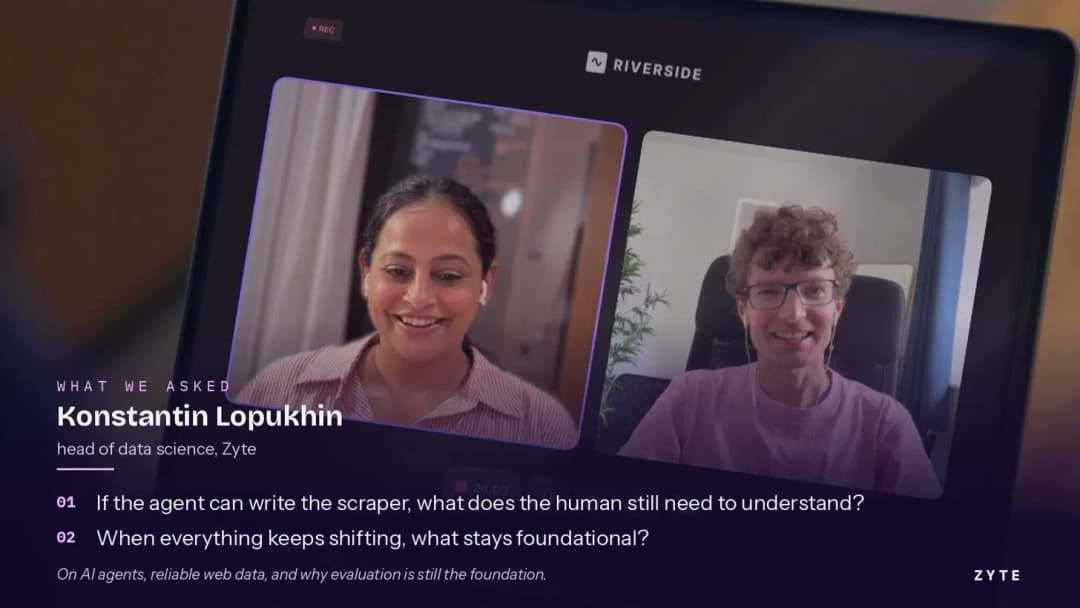
The best agent skill is the one that says the least
More instruction, worse output. Zyte's head of R&D on why telling your agent exactly what to do can blind it to the obvious answer.
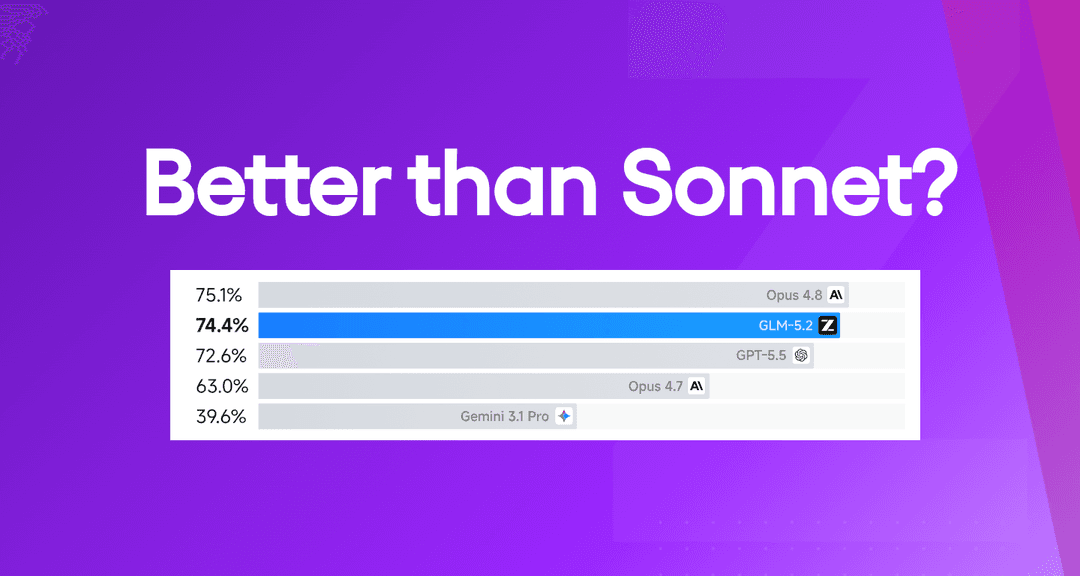
Why I'm adding GLM-5.2 to my agentic coding arsenal
Is GLM-5.2 really closing the gap to Anthropic - and at just a fraction of the cost - or is it just more AI hype? I think so, and let me show you why.
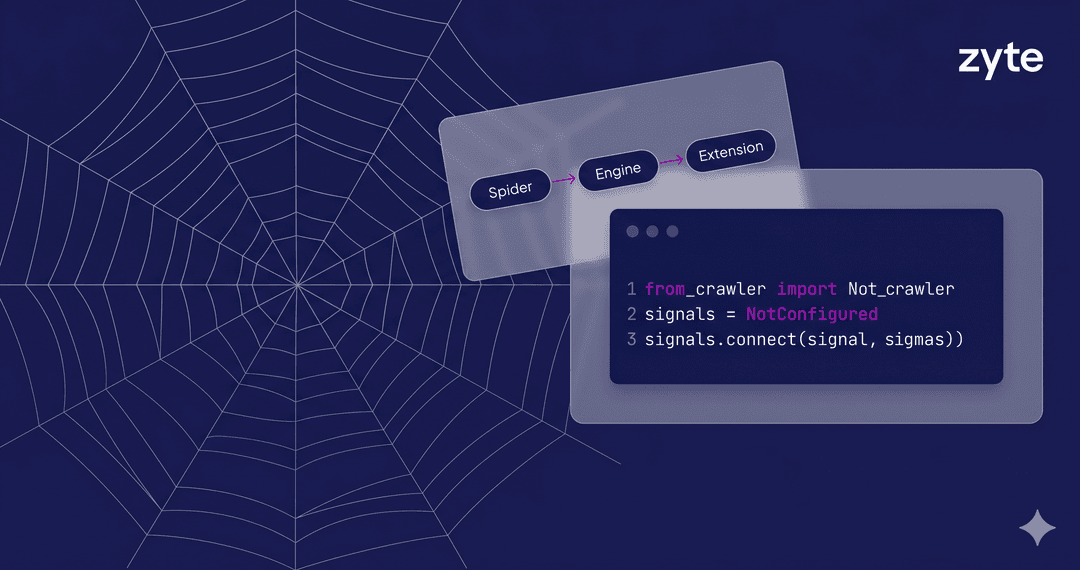
How to build your first Scrapy extension
Why my Scrapy project plays a triumphant fanfare when a crawl finishes clean and a sad trombone when it doesn't, and how I finally learned how to build Scrapy extensions (it's easy)

My personal agent setup: the architecture that runs my household and my DevRel work
"Four people, four diets, two work schedules, and a baby who answers to nobody. That's what finally made me build a personal agent." A walkthrough of the actual architecture I run to hold my household and my DevRel work together — profiles, skills, memory, and the web-data layer that makes it all reach the live web.
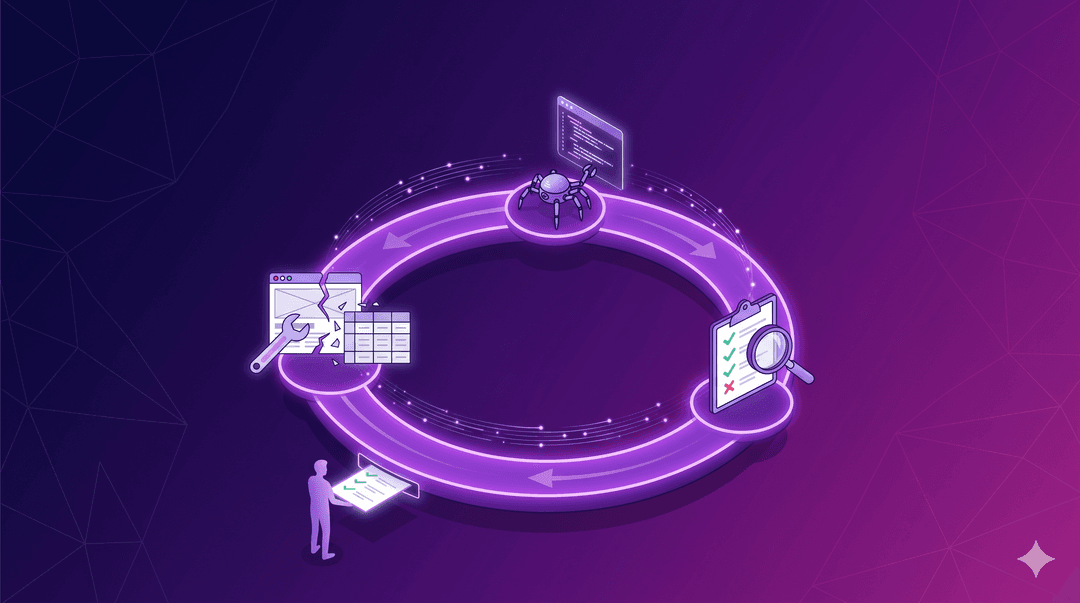
Now what exactly is loop engineering? And where do Anthropic's Fable 5 model and web scraping fit in?
A viral clip from Claude Code's creator put a name to something a lot of us have been circling: loop engineering. Here's why web scraping may be its best-fit domain — and what that means in practice.

What's becoming of web scraping developers in the age of AI agents?
AI agents can generate code, suggest selectors, and draft crawl logic. What they can't do is design the system that decides when to stop, what to trust, and how to recover when the web pushes back. That job still belongs to a human.
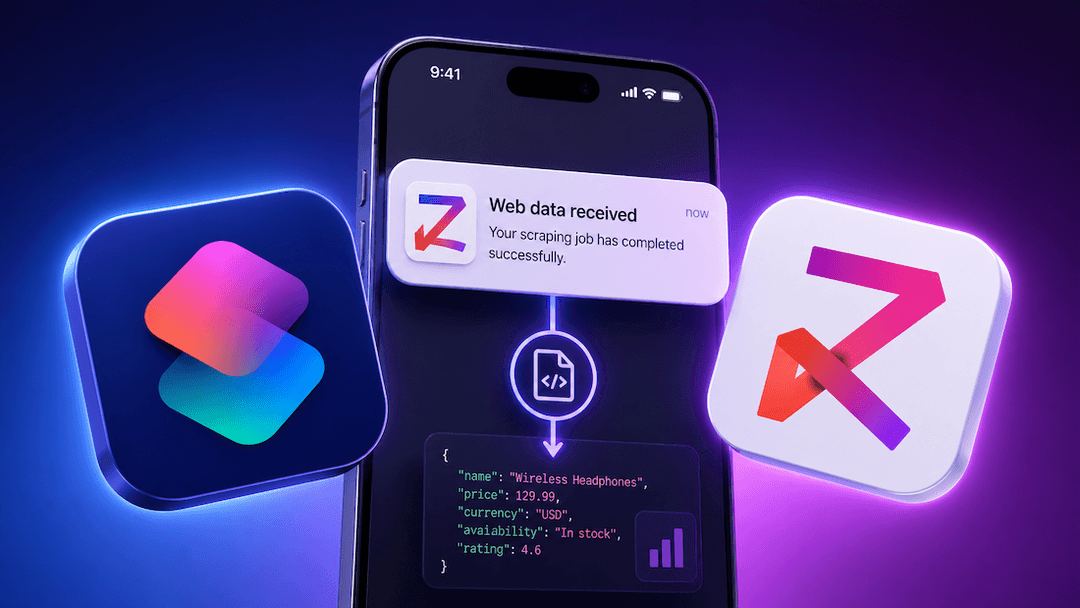
Web scraping on an iPhone? Yes, really!
When you can scrape the web by API, a world of possibility opens up. Yes, you can extract live web data using iOS Shortcuts.

Introducing Zyte Web Data for Claude Code: Production-ready scraping from a prompt
Developers are embracing agentic coding tools - but data engineers need tools with specialist scraping skills.

Copilot like a pro: Eight tips that supercharged my workflow
AI-assisted coding is a revelation. But are you getting the most out of your IDE’s sidebar sidekick?
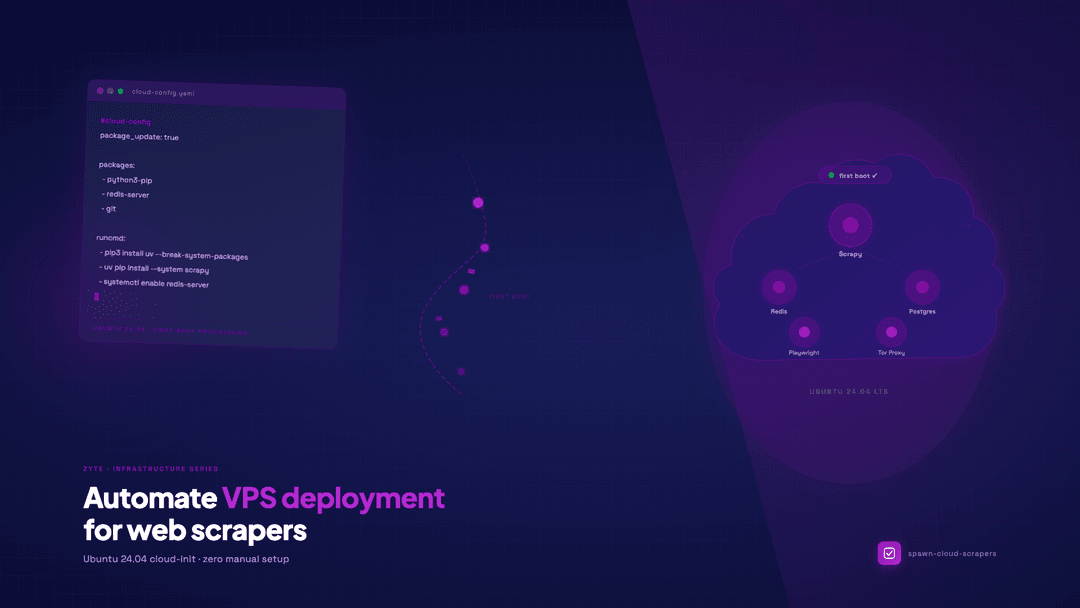
Automate deployment of your web scraper on VPS with Ubuntu 24.04 cloud-init
Your VPS is ready, but now you need to work through the same sequence you have run a dozen times before: apt update, apt install python3-pip, pip install scrapy, playwright install chromium, the Chromium dependency list that never installs cleanly on the first try, Redis, possibly Postgres, whatever else this particular project needs.
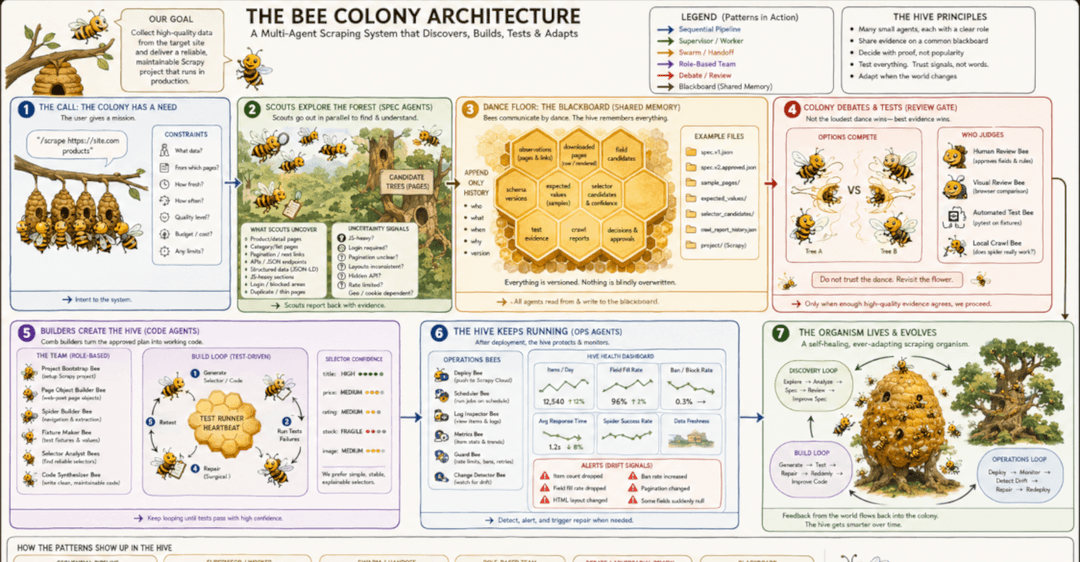
What multi-agent orchestration looks like in a large-scale web scraping project
Multi-agent orchestration is having its moment. The diagrams are everywhere now. Boxes for planners, boxes for hands, boxes for daemons, arrows to a shared brain, a human floating at the top. They keep getting prettier. The part where the web pushes back is still the part nobody draws.
Get the latest posts straight to your inbox
No matter what data type you're looking for, we've got you




_HFpro5d6k3.png&w=256&q=75)
_E4PyVpfAxa.png&w=256&q=75)


-(1).png&w=1920&q=75)
-(1)_VZGHqxCgXV.png&w=1920&q=75)
